
One intelligence layer,
eight working surfaces.
Blockchain intelligence, monitoring, risk analysis, entity attribution, case management and compliance tooling read from the same graph of addresses, transactions and evidence — so an alert, an investigation and a report never disagree about what happened.
What does the ChainwatchCrypto platform do?
The ChainwatchCrypto platform provides eight working surfaces over one canonical transaction graph: blockchain intelligence, wallet and entity intelligence, risk analysis, transaction monitoring, KYT, KYB, sanctions screening and case management. Because every surface reads the same graph, a monitoring alert and a court-facing report describe an event identically.
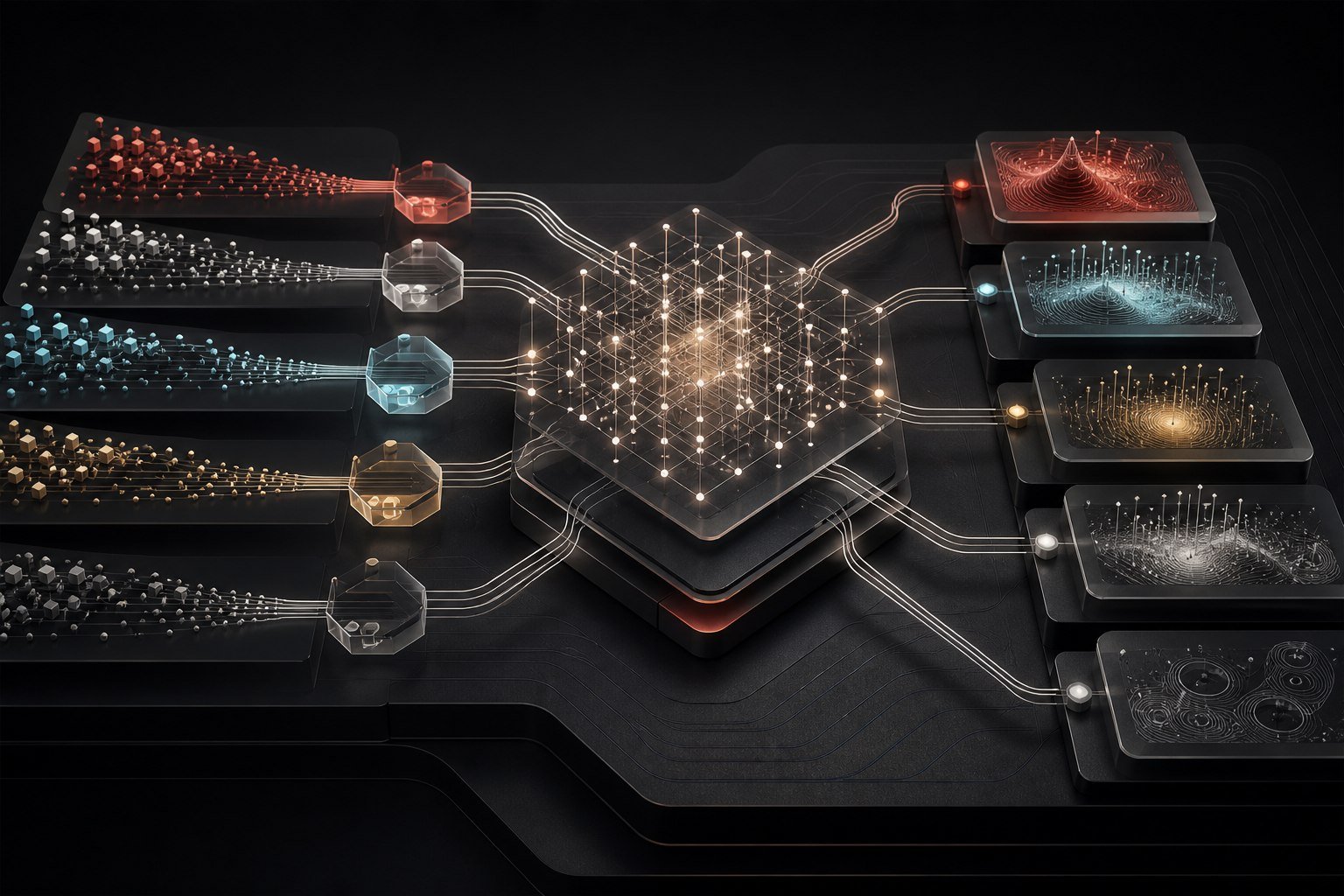
Every surface, and what it is actually for.
Nothing here is a feature list for its own sake. Each surface answers a question an analyst, a compliance officer or a victim of theft actually asks.
Blockchain Intelligence
Open an address and read its activity, relationships and fund flow across supported networks.
Learn moreTransaction Monitoring
Watch addresses against thresholds you set, and decide what a match should trigger.
Learn moreRisk Analysis
Score exposure to high-risk counterparties, with every contributing signal shown.
Learn moreWallet Intelligence
A full profile per address: counterparties, exposure, evidence and investigation status.
Learn moreEntity Intelligence
Attribution to known services, asserted only with a source, evidence trail and confidence level.
Learn moreKYT — Know Your Transaction
Screen transactions in flight against configurable risk policy.
Learn moreKYB — Know Your Business
Assess a counterparty business and the on-chain footprint behind it.
Learn moreSanctions Screening
Screen against published designations, with the list version recorded on every result.
Learn moreCase Management
Structured investigations: findings, hypotheses, evidence, versions and reports.
Learn moreAPI Platform
The same intelligence in your own systems, with keys, scopes and webhooks you control.
Learn moreOne graph. Many readings.
Ingestion, attribution, risk and casework are separate services over one canonical data model. That is what keeps a monitoring alert and a court-facing report describing the same event the same way.
| Layer | What it guarantees |
|---|---|
| Ingestion | Blockchain providers behind a swappable interface. A provider outage degrades freshness, not correctness. |
| Normalisation | Addresses, transactions, transfers and assets mapped to one schema across every supported chain. |
| Clustering | Heuristics applied per chain, each recorded with the rule that produced it. |
| Attribution | Entity links carry a source, an evidence reference and a confidence level, or they are not asserted. |
| Risk | Deterministic scoring over observable signals, versioned so an old score can be reproduced. |
| Casework | Investigations, evidence and reports reference the graph rather than copying it. |
No part of the application is written against a single blockchain data provider. Providers sit behind a BlockchainProvider interface, so a network can be added, swapped or failed over without touching investigation logic.
Risk model versions are retained. A score produced during an investigation can be recomputed later with the model that produced it, which is what makes a report defensible.
Where analysis is available.
Coverage is stated per network rather than as a headline number, because the analysis available on a UTXO chain is not the analysis available on an account chain.
| Network | Symbol | Analysis available |
|---|---|---|
| Bitcoin | BTC | UTXO clustering, change-address heuristics, common-input ownership |
| Ethereum | ETH | Account tracing, ERC-20 and ERC-721 transfers, contract interaction decoding |
| Tron | TRX | TRC-20 stablecoin flow, energy and bandwidth delegation patterns |
| BNB Chain | BNB | BEP-20 transfers, bridge endpoints, DEX routing |
| Polygon | MATIC | PoS bridge tracking, ERC-20 equivalents |
| Solana | SOL | SPL token transfers, program-derived address relationships |
Supported networks and the depth of analysis available on each may change. This table describes the platform's design coverage; confirm current availability for your chain during a case assessment.